
.jpg)

New AI statistics are emerging on a daily basis that underscore the astonishing paradigm shift we’re all living through. As capital expenditures surge and work life undergoes a rapid transformation, it can be easy to feel like you’re not keeping pace. Indeed, many marketing leaders recognize the need to go “all-in” on AI, yet feel uncertain about how to best leverage it and how to scale responsibly.
That’s why we’ve curated a collection of the most relevant AI statistics for marketers spanning global investment trends, workplace transformation, and marketing team adoption. We want to help marketing leaders and their teams find their footing in this new frontier because the opportunities with AI can be transformative.
The Global AI Industry
Big tech and VCs are betting big on the AI future. And while some doomsayers say it’s a bubble, industry experts like Alphabet CEO Sunda Pichai say it will be more transformative than “electricity or fire.” Here are some big picture AI stats:
- The total economic activity generated by AI across industries is expected to reach $13 trillion by 2030. (McKinsey & Company)
- The infrastructure that supports AI is massive: one estimate projects spending on AI infrastructure could hit $6.7 trillion by 2030, including the build-out of data centers and compute. (McKinsey & Company)
- $2 trillion will be needed to fund the computing power needed to meet anticipated AI demand by 2030. And the world is still $800 billion short to keep pace with demand. (Bain & Company)
- In the U.S., AI-related investments accounted for 71% of VC funding in Q1 2025 (or ~$65 billion), up from 45% in 2024 and 26% in 2023. (Statista)
- The AI software market size is expected to grow from $222.57 billion in 2024 to $817.68 billion in 2029, representing a compound annual growth rate (CAGR) of 29.3%. (The Business Research Company)
- In trying to attract AI talent, Mark Zuckerberg of Meta offered several OpenAI researchers compensation packages of up to $300 million over four years, including stock grants, base salary, and bonus structures. (Wired)
AI and Work
Businesses and employees are already widely using AI in the workplace. However, usage and perceptions of its use vary widely. Here are some stats on how AI is shaping how we work:
AI in the Workplace and Where It’s Used
- More than three-quarters of companies report using AI in at least one business function, with gen-AI usage “rapidly increasing.” (McKinsey & Company)
- The share of organizations regularly using gen AI in at least one function rose to 71% from 65% in early 2024. (McKinsey & Company)
- The most common functional areas for gen AI use at work are marketing and sales, product and service development, service operations, and software engineering. (McKinsey & Company)
- The technology, media, and telecommunications industries report using AI agents more than any other industry. (McKinsey & Company)
Corporate AI Investment and Readiness
- Over the next three years, 92% of companies plan to increase AI investments; 55% expect increases of at least 10%. (McKinsey & Company)
- Only 1% of leaders describe their companies as “mature” in AI deployment, meaning having AI fully integrated into workflows with substantial outcomes. (McKinsey & Company)
- Organizations with visible AI strategies are 2x more likely to experience revenue growth from AI than those using ad-hoc approaches. (Thomson Reuters)
Employee AI Usage
- Nearly 94% of employees and 99% of C-suite leaders say they’re familiar with gen-AI tools. However, leaders underestimate employee use at 4%. In reality, over 30% say they use AI in their daily work. (McKinsey & Company)
- In 2025, 90% of tech workers are using AI tools, up from 14% in 2024. (CNN/Google)
- Nearly half of employees say they want more formal AI training and view it as the best lever to boost AI adoption. They also want pilots, betas, and incentives to encourage use. (McKinsey & Company)
- 7 in 10 marketers say their employer does not yet provide generative AI training. (Salesforce)
- 71% of marketers say generative AI allows them to focus on more strategic work. And they estimate it saves them over five hours of work per week, or over one month per year. (Salesforce)
- 54% of marketers believe generative AI training programs are important for successfully using it in their role. (Salesforce)
Trust, Governance & Risk
- 71% of employees trust their employers to act ethically as they develop AI. This is higher than their trust in universities, big tech companies, and start-ups. (McKinsey & Company)
- Organizations report stepping up risk management for issues like inaccuracy, cybersecurity, and IP infringement as gen-AI deployment scales. (McKinsey & Company)
Job Changes and Loss from AI
- By 2030, about 30% of current U.S. jobs could be fully automated, and 60% will have significant changes in tasks because of AI, resulting in tens of millions of jobs undergoing transformation or loss. (National University)
- Entry-level jobs and young workers, especially in tech sectors, will be disproportionately affected by AI, with unemployment rising among 20- to 30-year-old tech workers due to AI automation. (Goldman Sachs)
- 8 in 10 professionals expect AI to have a transformational or high impact on their work over the next five years. (Thomson Reuters)
- Despite compelling evidence of AI’s impact on hiring, the range of affected positions remains narrow. If current AI use cases were expanded across the economy, just 2.5% of U.S. employment would be at risk of displacement. (Goldman Sachs)
AI in Marketing
When it comes to AI in marketing, the teams that use it both strategically and tactically are the ones who are in the lead and will likely stay ahead.
AI Marketing Adoption: Mainstream, but Mostly Tactical
- 61% of marketing teams actively use AI, signaling mainstream adoption across mid-market and enterprise teams. (Fratzke)
- Today’s top AI in marketing use cases skew to quick wins: visual/image generation (47%), writing/editing content (42%), and automated reports/dashboards (39%). (Fratzke)
- Leading marketing teams are using AI for more than content. High-maturity teams are over 2x more likely to use AI to analyze campaign performance and marketing metrics (51% vs 21%). (Fratzke)
Brand Strategy in the AI Era
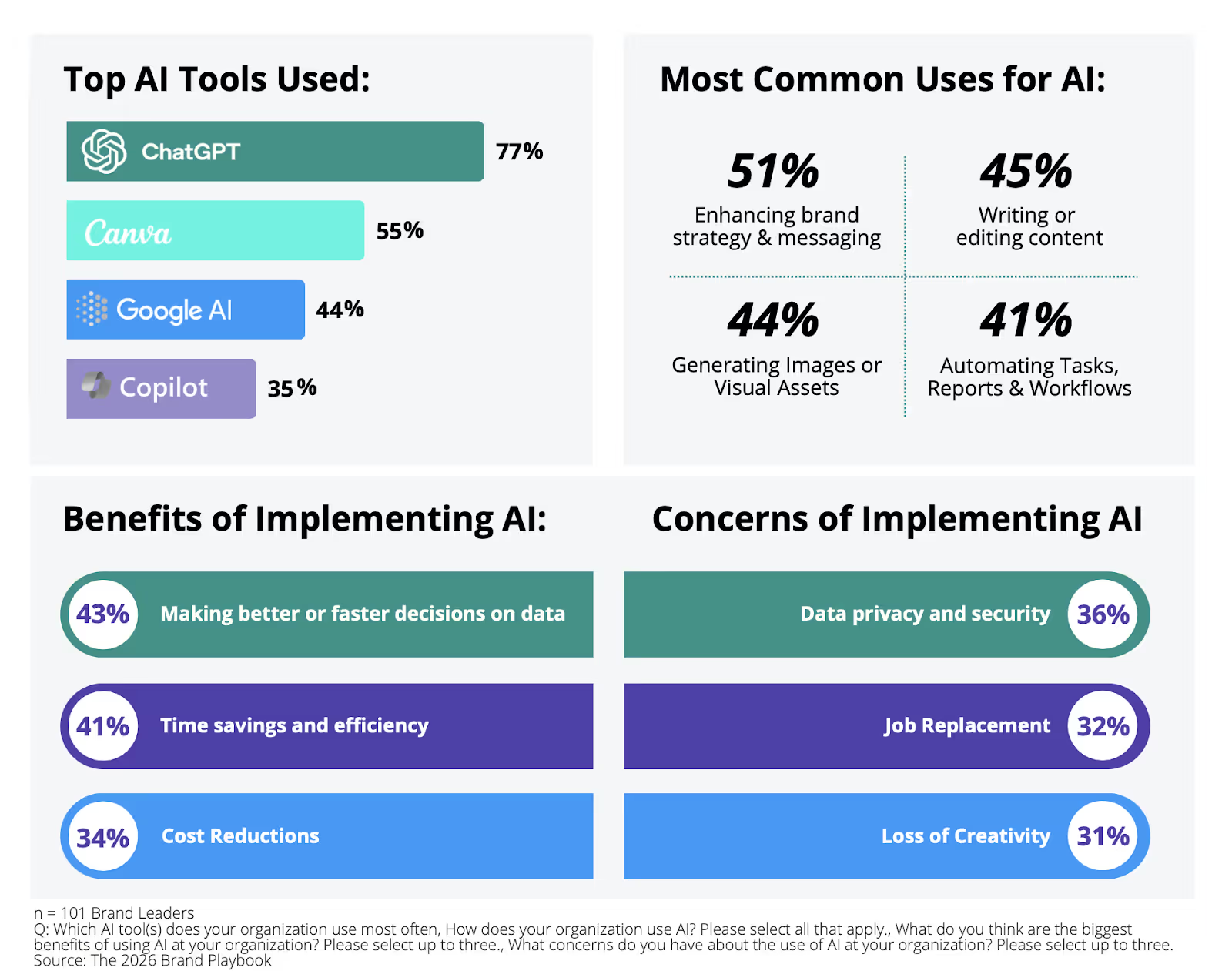
- 81% of marketing organizations are using AI in brand work, primarily for content, visuals, and workflow automation. (Fratzke)
Benefits of AI in Marketing, Sales, and Customer Service
- Using AI in lead generation can increase conversion rates by 25%. (Super AGI)
- Marketing and sales organizations that invest deeply in AI report ROI improvements of 10–20% on average, driven by better targeting and optimization of campaigns. (McKinsey & Company)
- 51% of email marketers say using AI in email marketing is more effective than manual efforts (Statista)
- Sales teams that use AI to free up their time so they can spend more time with customers report a 30% improvement in win rates. (Bain & Company)
- After adopting marketing automation and AI-powered personalization, some companies saw 34% average revenue growth and increased customer retention and loyalty. (SAP)
- AI chatbots can handle 80% of routine customer service inquiries, freeing human agents to focus on complex issues. (AIPRM)
Barriers to AI Success
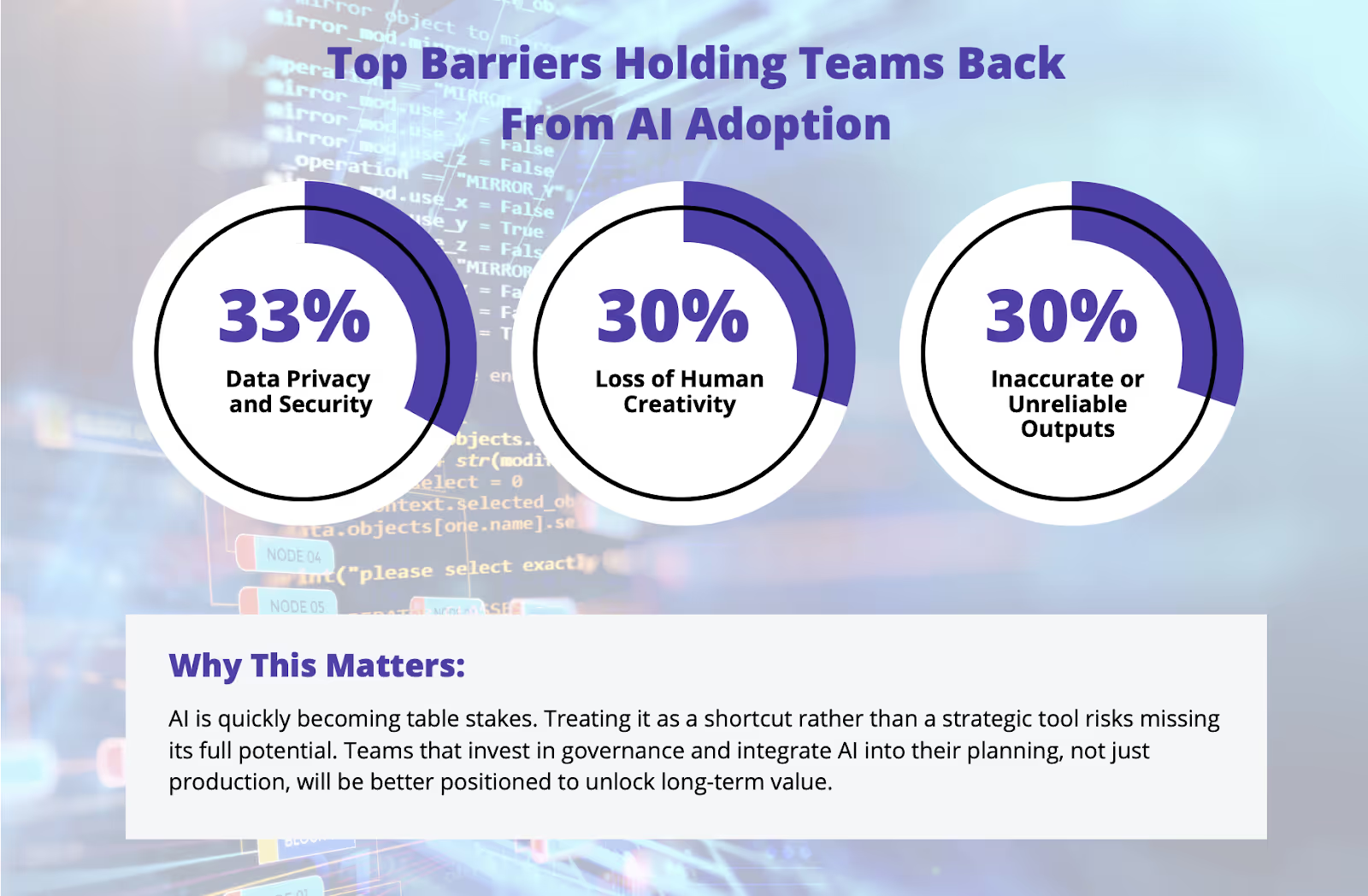
- The biggest concerns that marketing organizations have when it comes to adopting AI are: data privacy and security (33%), loss of creativity (30%), and inaccurate or unreliable outputs (30%), which are often rooted in unclear governance and siloed experimentation. (Fratzke)
- In brand functions specifically, concerns about AI cluster around privacy (36%), job replacement (32%), and creativity loss (31%). (Fratzke)
Ushering in a New Era for Business and Marketing Teams
The latest AI statistics reveal an economy that’s being rewired for unprecedented speed and efficiency. Yet for CMOs and other marketing leaders, success will hinge on how quickly AI is adopted and strategically applied. The data is clear: We are at the very beginning of the AI boom, and marketing organizations that use AI both strategically and tactically will be the ones that outpace competitors.
Empowering teams with training to upskill, applying corporate governance, and investing in the strategic and ethical use of AI is how marketing executives will lead their teams and their companies into the future.



_%20Article%20Cover%20Image.png)


