

Customer surveys help you understand what your customers are really experiencing and how to improve it. When done well, they uncover insights that can directly support smarter decisions and business growth.
However, getting honest, meaningful feedback isn’t automatic. The way a survey is designed makes all the difference. In this article we'll walk you through best practices for creating customer surveys that feel easy for customers to answer and deliver insights your teams can actually use.
.avif)
We'll discuss the importance of customer surveys, provide tips for crafting impactful survey questions, and suggest various channels for survey distribution.
By following these guidelines for customer surveys, brands can gain deep insights into customer satisfaction, identify areas for improvement, and ultimately enhance their products and services to meet (and hopefully exceed!) customer expectations.
Article Overview:
- 8 Tips for Creating Customer Surveys That Get Responses
- Best Channels for Customer Surveys
- 25 Example Customer Survey Questions to Get You Started
- How to Maximize the Impact of Your Customer Survey Data
What are Customer Surveys?
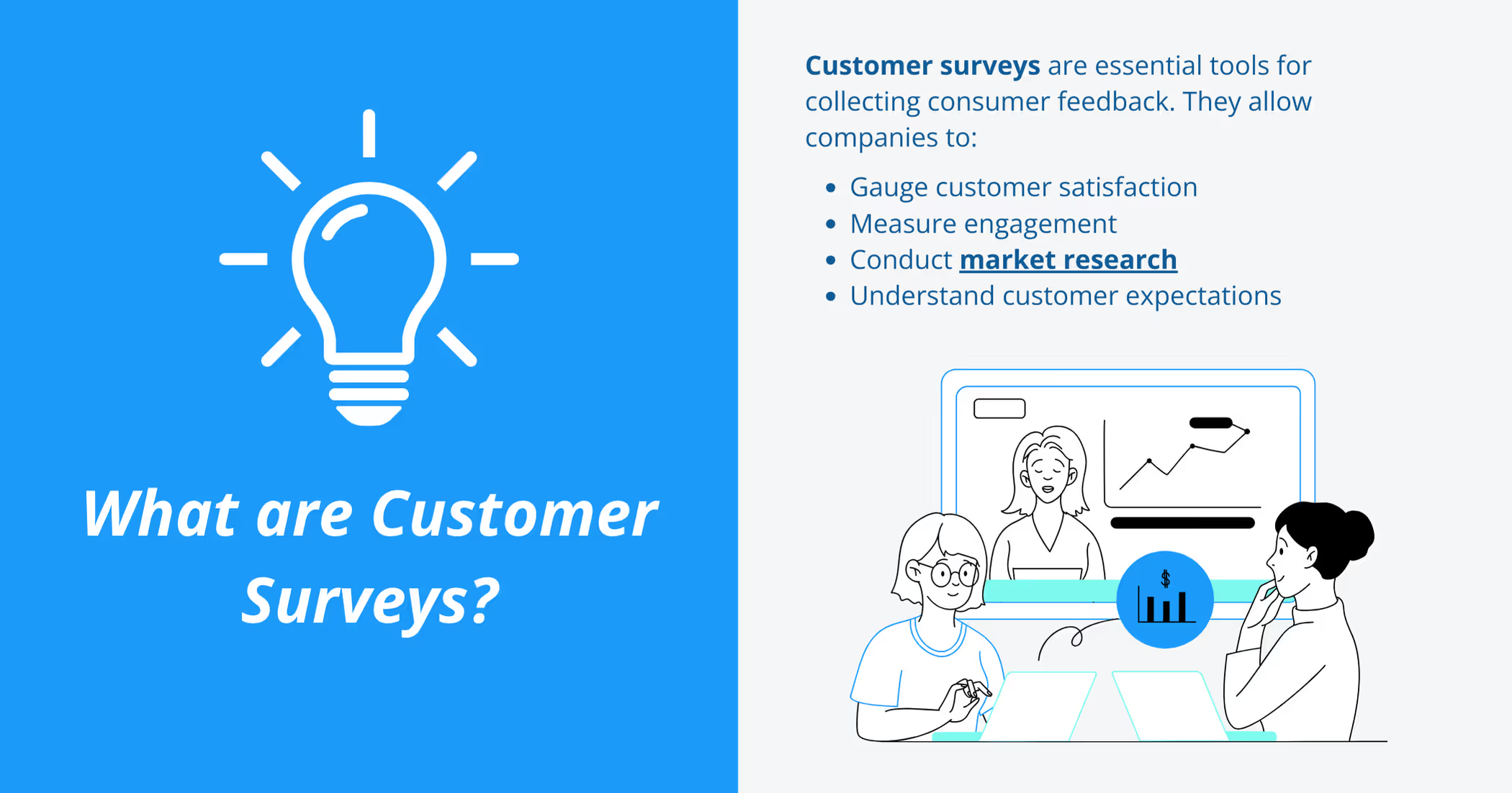
Customer surveys are a powerful way to hear directly from your customers and understand what truly drives their behavior. They reveal what’s working, what’s falling short, and how customers experience your brand. This feedback is not just valuable; it can also be a game-changer.
When used consistently, surveys help teams improve products and services, strengthen customer experiences, and build trust by showing customers their voices matter. In fact, 80% of companies experiencing year-over-year growth use customer surveys to gather customer experience data.
At Fratzke, we’ve seen how the right survey strategy turns feedback into action. Below, our experts share tips to help you create customer surveys that clearly surface your customers’ needs, expectations, and opportunities for growth.
Why Do Customer Surveys Matter?
Customer surveys matter because they give you direct access to how your customers actually experience your business - not how you think they do. They surface insights you can’t get from analytics dashboards or internal meetings alone, and they help teams make smarter, more confident decisions as they grow.
Here’s how customer feedback fuels real business impact, in practical terms:
- Better decisions, backed by evidence
Surveys replace guesswork with real data. Instead of debating opinions internally, teams can prioritize based on what customers say matters most like saving time, budget, and effort. - Stronger retention and loyalty
When customers share frustrations or unmet needs, surveys give you an early warning system. Addressing issues before they become deal-breakers helps reduce churn and shows customers you’re listening, which builds trust over time. - Smarter product and service development
Customer input keeps innovation grounded in reality. Surveys reveal what’s working, what’s missing, and what customers want next, so you’re building solutions people will actually use and pay for. - Clearer competitive advantage
Understanding what customers value most helps you see where competitors fall short. These insights make it easier to sharpen positioning, messaging, and differentiation in crowded markets. - Direct impact on revenue
Customer satisfaction isn’t just a feel-good metric - it’s also tied to growth. Happy customers buy more, stay longer, and recommend you to others. Surveys help connect experience to performance. - Alignment across teams
Customer feedback creates a shared source of truth. Marketing, sales, product, and leadership can rally around the same insights, reducing friction and keeping everyone focused on the same goals.
In short, customer surveys turn opinions into clarity and clarity into growth.
Creating Customer Surveys: 8 Tips That Get Responses
1. Define Your Customer Survey Goal

Before crafting your customer survey, it's crucial to get clear about what you want to achieve from the survey. You need to determine a clear and specific goal. It is essential that you pinpoint strictly what customer experience metric or touchpoint you want to evaluate.
This could be anything from your customer retention rate, satisfaction score, or specific aspects of your customer support experience. You're designing a customer survey that provides actionable insights, making your audience feel important and valued.
For instance, a customer satisfaction (CSAT) survey might include "How satisfied were you with the support you received?" to gauge the quality of customer support experiences. Being specific prevents survey fatigue and ensures that the feedback collected is both relevant and valuable.
2. Write Clear, Unbiased Customer Survey Questions

Writing clear and unbiased questions is key for obtaining reliable responses in your customer survey. Vague, leading, or complicated questions can frustrate respondents, lead to inaccurate data, or even cause the respondents to abandon the survey. Ensure your questions are straightforward, free of jargon, and unbiased. We recommend avoiding assumptions and using simple language to enhance clarity.
For example, questions like, "Did you find the product easy to use?" are more effective than, "What difficulties did you encounter while using the product?" Straightforward, objective language increases the likelihood of getting honest and precise customer feedback.
3. Send Customer Service Surveys in Relevant Channels

Send customer surveys through channels your customers frequently use to maximize response rates. This could be in-product prompts, email, website embeds, or SMS.
You can know which channels your customers are most likely to use by pulling data from other business insights, such as audits. For example, a digital marketing audit can show if your customers are coming in through social media, email lists, or websites. Knowing how your customers initially came in can show you the channel to use when sending back out information, like a customer survey.
Reaching customers where they are most engaged increases the chances of receiving meaningful feedback. For instance, due to their convenience, SMS surveys often yield higher response rates than other digital channels. In fact, according to research, a customer is 134 times more likely to read a text than an email.
Combining these methods ensures a broader range of responses, making your customer survey more effective. This data-backed strategy instills confidence in the effectiveness of your survey methods.
Best Channels for Customer Surveys:
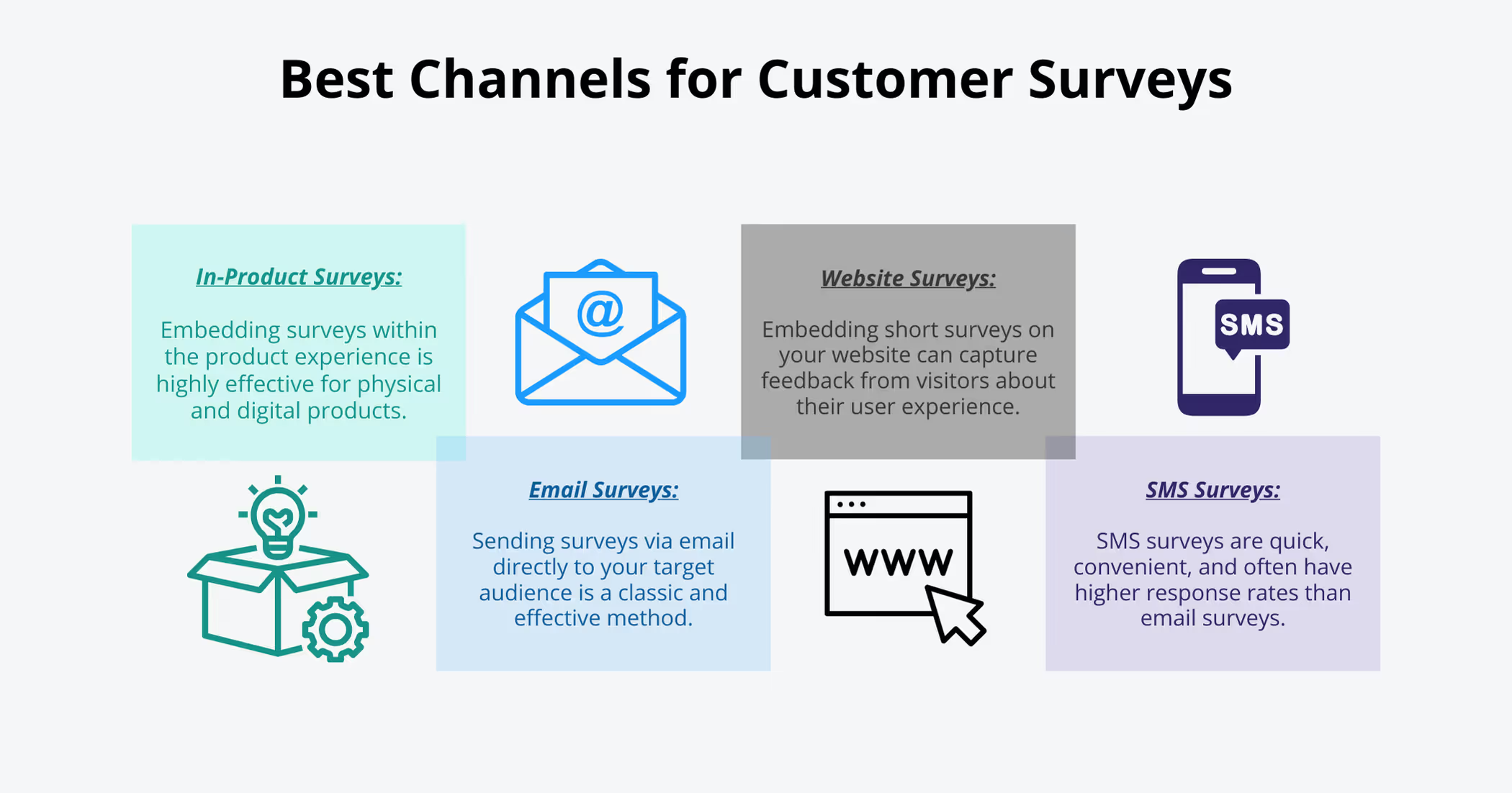
In-Product Surveys: Embedding surveys within the product experience is highly effective for physical and digital products. For physical goods, this can be done by including survey invites in the packaging or triggering survey prompts after a certain usage period for digital products. For example, Zoom uses post-meeting surveys to gather feedback on user experiences.
Website Surveys: Embedding short surveys on your website can capture feedback from visitors about their user experience. This method is convenient for customers already engaged with your site and allows you to gather insights on improving content and navigation.
Email Surveys: Sending surveys via email directly to your target audience is a classic and effective method. Companies like Headspace use email surveys to collect customer satisfaction feedback, reminding recipients that their input will help improve the service.
SMS Surveys: SMS surveys are quick, convenient, and often have higher response rates than email surveys. Research shows that customers are significantly more likely to read and respond to text messages. Platforms like Zendesk integrate SMS surveys to collect customer satisfaction and Net Promoter Score (NPS) data.
4. Keep Surveys Short

Brevity is critical to maintaining a high response rate in customer surveys. Most should take only a few minutes to complete, and shorter surveys with 1-3 questions typically have higher completion rates.
A study by Survicate revealed that customer surveys with fewer questions have a completion rate of 83%, whereas those with more than 15 questions drop to 42%. Respecting customers' time by keeping surveys brief and also indicating the estimated completion time can significantly improve participation rates.
5. Offer Incentives

Who doesn't like a Starbucks gift card? Offering incentives can significantly boost response rates by encouraging survey participation. Consider providing monetary rewards like cash, gift cards, or discounts. Physical gifts such as notebooks or mugs can also be practical.
Depending on your company's products and services, you may want to consider using donations as an incentive. Charitable donations appeal to customers who value social responsibility and may align with your brand. Research shows that 73% of consumers expect companies to act for the good of society. Aligning incentives with these values can enhance customer engagement.
6. Include a Variety of Customer Survey Questions

To gather comprehensive feedback, your customer survey should include a mix of open-ended and closed-ended questions. While open-ended questions provide detailed insights, limiting their number prevents survey fatigue.
Closed-ended questions like yes/no, rating scales, and multiple-choice options allow quick responses and easy data analysis. This balanced approach ensures you collect both qualitative and quantitative data.
7. Give Your Customers Options

Options, options, options. Consumers like options, so providing flexibility in your customer survey can enhance the quality of responses. For example, customers can skip questions, use an "Other" option in multiple-choice questions, and choose their preferred survey channels.
Options also create an opportunity for an inclusive survey and results. For example, inclusive language in demographic questions helps ensure all respondents feel represented and comfortable.
8. Always Follow Up

Following up with customers after they complete a survey demonstrates that you value their input. Even following up with a simple “Thank you” goes a long way. Inform customers about changes based on their feedback to build trust and encourage future participation. Many companies release reports or infographics summarizing survey results and actions taken.
25 Example Customer Survey Questions to Get You Started
Now that we've covered these eight tips for creating effective customer surveys let's delve into 25 example questions that you could use for your own customer surveys. Our experts have tailored the questions for various purposes, such as gauging customer satisfaction and loyalty and gathering specific feedback on experiences.

These examples are a mix of open-ended and closed-ended questions that are crafted to collect quantitative and qualitative data, offering a comprehensive understanding of customer needs and preferences. You can pick and choose which questions would work best for your customer survey so you can get actionable feedback that drives decisions to impact business growth.
Customer Satisfaction (CSAT) Survey Questions
Measures how happy customers are with a recent interaction, purchase, or overall experience. These questions help you understand whether you’re meeting expectations and delivering value across your customer experience.

- How satisfied are you with our product/service?
- How would you rate the quality of the support you received?
- On a scale of 1-10, how satisfied are you with your recent purchase?
- How well did our product meet your expectations?
- How satisfied are you with the value for money of our product/service?
Net Promoter Score (NPS) Survey Questions
Assesses customer loyalty and advocacy by measuring how likely customers are to recommend you. These questions reveal not just satisfaction, but also their emotional connection to your brand, and highlight what drives promoters, passives, and detractors.

- How likely are you to recommend our product/service to a friend or colleague?
- What is the primary reason for your score?
- What could we do to improve your rating?
Churn Survey Questions
Explores why customers leave and what could have changed the outcome. Churn questions uncover gaps in product, experience, or value that directly impact retention and revenue.

- Why did you decide to stop using our product/service?
- What could we have done to keep you as a customer?
- Is there any specific feature or service you found lacking?
Customer Experience (CX) Survey Questions
Evaluates how easy, effective, and enjoyable it is to interact with your brand across key touchpoints. These questions focus on usability, support, and whether customers can successfully achieve their goals.

- How easy was it to navigate our website?
- How would you rate your overall experience with our customer support team?
- Did our product/service help you achieve your goals? How?
- How often do you use our product/service?
Product/Service Feedback Survey Questions
Gathers detailed input on what’s working, what’s missing, and what needs improvement across your products and/or services. This feedback helps teams prioritize enhancements and ensure offerings solve real customer problems.

- What do you like most about our product/service?
- What changes would most improve our product/service?
- How satisfied are you with the delivery condition of your recent order?
- How well does our product/service solve your problem?
Market Research Survey Questions
These questions provide broader insight into customer preferences, awareness, and your competitors. This data can ultimately help guide positioning, feature development, and future growth opportunities.

- How did you hear about our product/service?
- Which features do you value the most in our product/service?
- What other products/services would you like us to offer?
- How would you compare our product/service to similar products/services you have used?
General Feedback Survey Questions
Creates open space for customers to share thoughts that don’t fit neatly into a category. These questions often surface unexpected insights, ideas, and opportunities for improvement.

- How can we improve your experience with our company?
- Is there anything else you want to share about your experience with us?
How to Measure, Analyze, and Act on Customer Survey Results
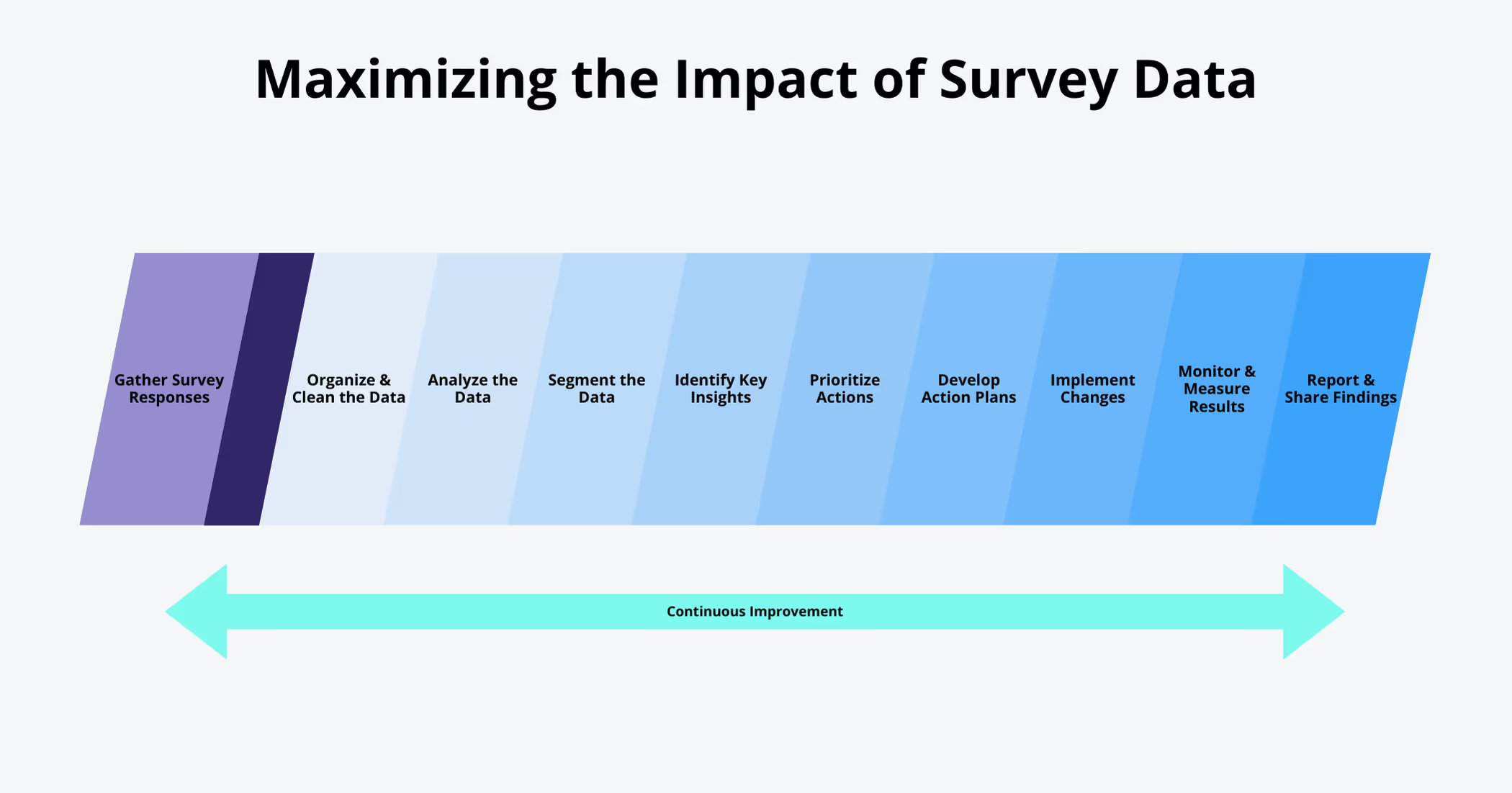
So you have created your customer survey, and the results are rolling in through SMS, email, and your website. Now, what do you do? We’re here to tell you that after collecting valuable insights from your customer surveys, the next critical step is to leverage this data effectively. Transforming raw feedback into actionable strategies can significantly enhance customer satisfaction, loyalty, and overall business performance.
Here's a comprehensive guide on how your team can maximize the impact of your customer survey data and drive meaningful improvements.
Organize and Clean the Data
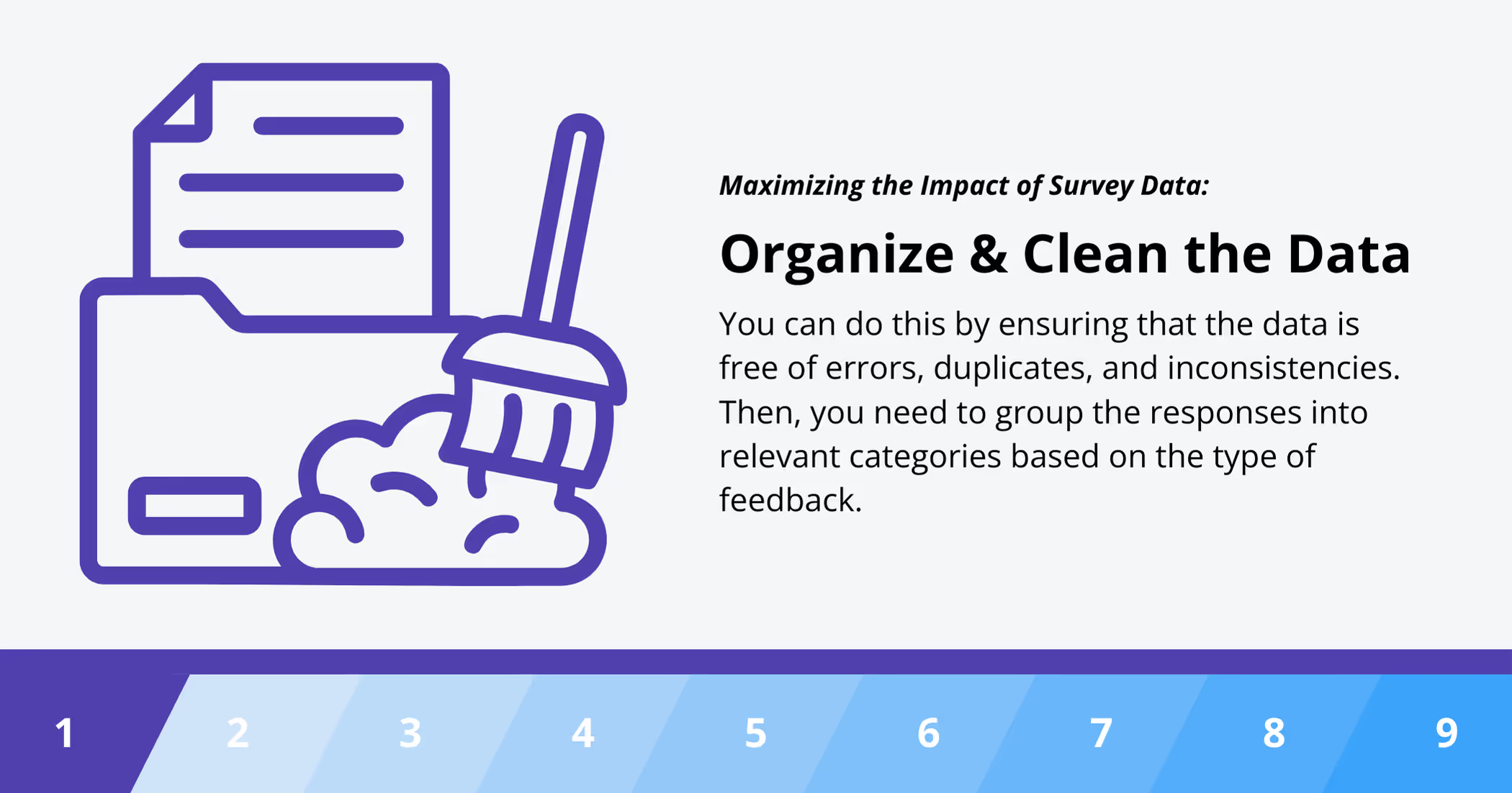
First, you need to make sure that your data is clean. You can do this by ensuring that the data is free of errors, duplicates, and inconsistencies. Then, you need to group the responses into relevant categories based on the type of feedback. You can group your data by:
- Product quality
- Customer service
- Website usability
- And other categories that are relevant to your survey.
Analyze the Data
Next, you need to analyze the organized data from your customer survey. You will have collected quantitative data, qualitative data, or both types of data.
Quantitative Analysis
To analyze quantitative data, statistical tools are used to analyze numerical data. Calculate averages, percentages, and trends to identify common themes and patterns. For example you can:
- Track key scores: Monitor CSAT, NPS, and CES to measure satisfaction, loyalty, and effort, and compare performance over time.
- Watch trends: Look at how scores change month to month or quarter to quarter to see what’s improving and what’s not.
- Compare customer groups: Break results down by customer type, product, or region to spot strengths and problem areas.
- Connect answers: See how different responses relate to each other, such as whether ease of use affects likelihood to recommend.
- Look beyond averages: Check how ratings are distributed to understand whether feedback is mixed or consistent.
- Confirm reliability: Make sure you have enough responses to trust the results as small sample sizes can be misleading. Generally 100+ is reliable for trends, though this varies by population size and desired confidence level.
Qualitative Analysis
For qualitative data, review open-ended responses for recurring themes and insights. We also recommend using coding techniques to categorize and interpret qualitative feedback. For example you can:
- Coding open-ended responses: Read through feedback and categorize comments into themes (pricing concerns, feature requests, service issues).
- Identify patterns: What topics appear repeatedly? What surprises emerge that you didn't anticipate?
- Use text analysis tools: AI-powered sentiment analysis and text analytics can process hundreds or thousands of responses to surface key themes quickly.
Segment the Data
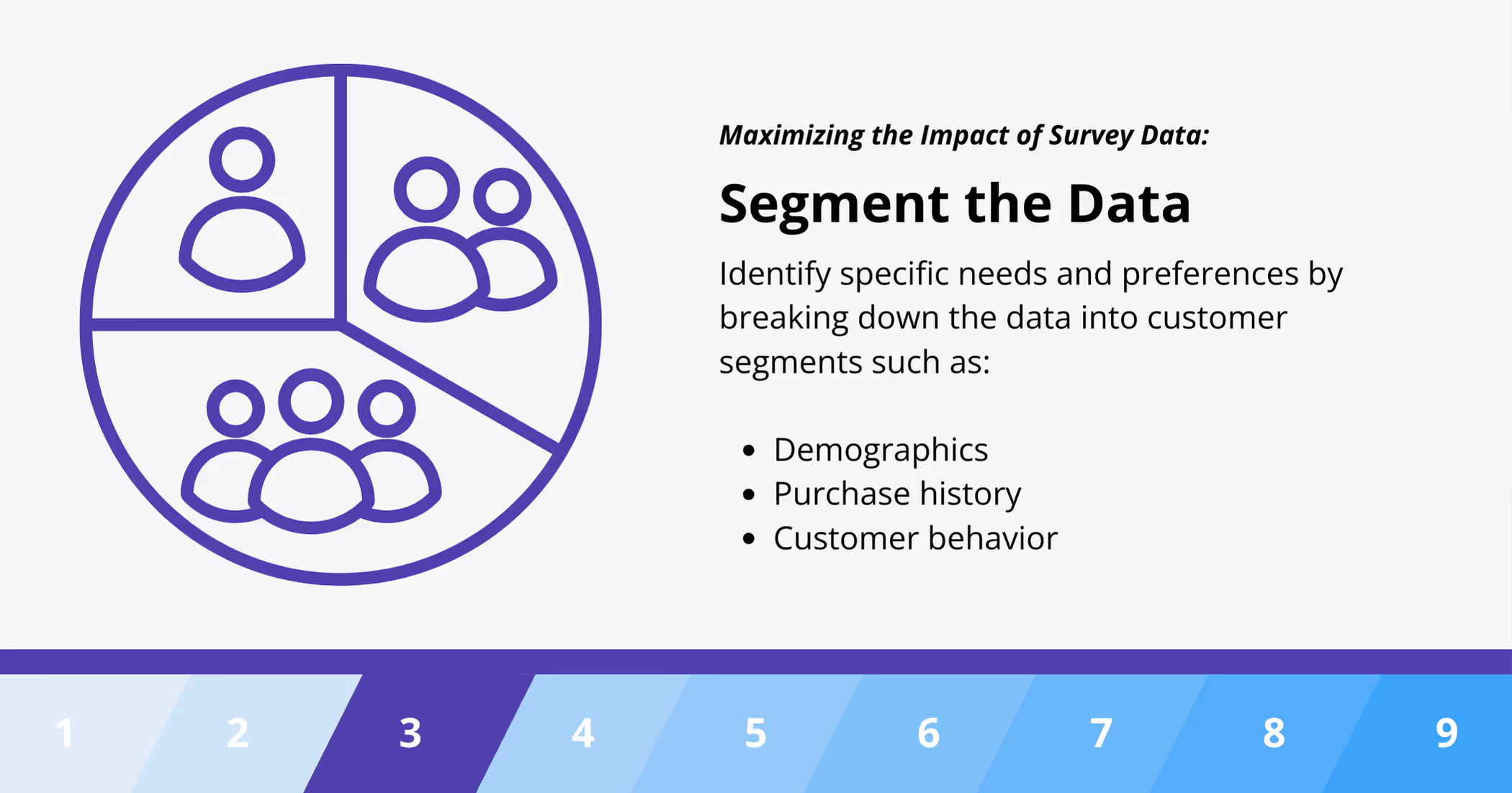
The next step is to segment the data from your customer survey. Identify specific needs and preferences by breaking down the data into customer segments such as:
- Demographics
- Purchase history
- Customer behavior
Go a bit deeper by considering a behavioral analysis to understand how different segments interact with your product or service.
Identify Key Insights
Now we’re getting to the golden part of the process where valuable business insights are starting to be revealed. You need to look for trends in the feedback that indicate broader issues or successes.It is the time to identify common problems and areas where customers are dissatisfied. It is also the time to highlight aspects of your product or service that customers appreciate.
Prioritize Actions
Your customer survey will most likely reveal several valuable insights. Prioritize issues based on urgency and potential impact on customer satisfaction and business performance. Then you need to determine the resources needed to address the identified issues.
Develop Action Plans
For each of those issues that were uncovered in your customer survey, there needs to be an action plan to address it. Just like at the beginning of your customer survey journey, you need to also now be clear about the goals of each action plan.
Define clear, actionable goals to address the identified issues and improve customer satisfaction. You will need to outline the steps required to achieve these goals. Then it’s time to put the plan into motion by assigning specific tasks to team members to ensure accountability.
Implement Changes
To implement these changes, you will need to communicate clearly with your team and your customers. Ensure that your team carries out the action plans within the specified timelines. Once the changes are in motion, inform your customers about your changes and improvements. This can be done through newsletters, emails, or social media updates.
Monitor and Measure Results
Just because improvements have been made doesn’t mean that your customer survey initiative is complete. It is crucial to monitor the implementation of changes and measure their impact on customer satisfaction and business metrics. Continuously collect feedback to evaluate the effectiveness of the changes and identify new areas for improvement.
Report and Share Findings
At this point in the customer survey creation experience, you will have valuable information in your hands. Document these insights by creating detailed reports summarizing the survey results, key insights, and actions taken. Then share these reports with relevant stakeholders within your organization.
At Fratzke, we also encourage our clients to share the outcomes and improvements with their customers to show that their feedback is valued and acted upon. This helps build trust and encourages future participation in surveys.
Continuous Improvement
One of the key elements of the customer survey process is to treat feedback collection and analysis as an ongoing process. The world is always evolving and so are your customers. Regularly update your surveys, analyze new data, and make iterative improvements to your products, services, and customer experience.


.jpg)