

Welcome to Two Hits & A Miss!
I'm Ryan Fratzke, Partner and Executive Strategist at Fratzke.
Each week, I look at what some of the world's biggest brands are doing in marketing, business strategy, AI, and customer experience.
I'll share two moves I think they got right and one that might have missed the mark, along with what we can learn from each about building stronger brands, connecting with customers, and driving growth.
Let's jump into this week's picks.
Hit #1: Walmart Gives Shoppers a Reason to Look Again
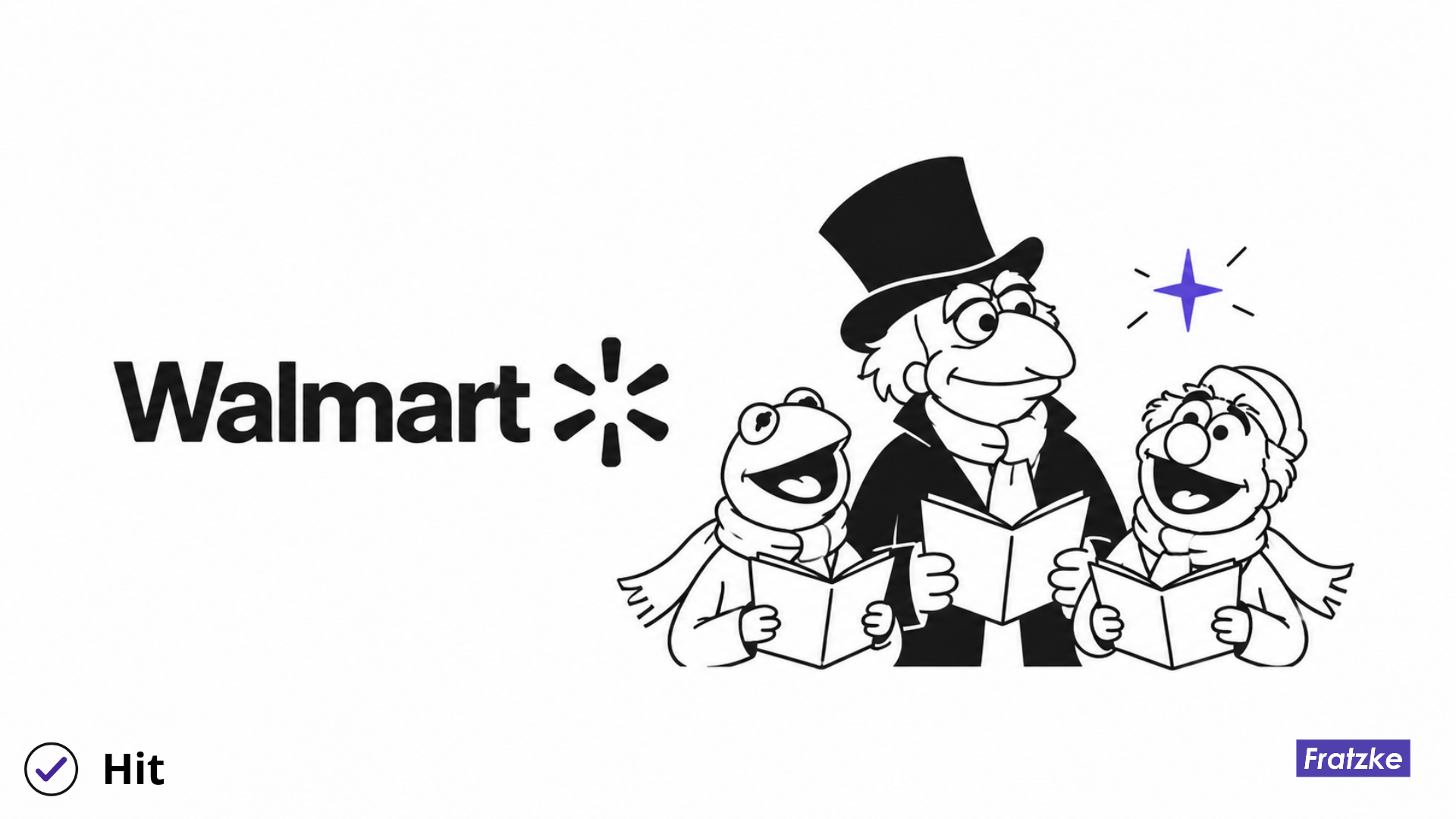
Walmart is bringing the Muppets into its holiday campaign, and I think the strategy behind it is pretty clever.
On October 26, Walmart introduced A Who Knew Carol, a campaign inspired by The Muppet Christmas Carol. Walton Goggins plays Scrooge alongside Kermit, Miss Piggy, and the rest of the Muppets.
Here's what I like about it.
A Christmas Carol is a story about someone realizing they've been looking at the world all wrong. And that's exactly what Walmart is trying to get customers to do.
Most people already know Walmart for low prices and everyday essentials. But the company wants shoppers to think about its broader assortment of gifts, brands, style, and delivery options.
So Walmart picked a story about changing your mind.
I love that connection.
There are plenty of brands that partner with celebrities or popular characters to get attention. Walmart found a way to make the characters part of the strategy.
And the Muppets are a pretty great choice for a holiday campaign. They're familiar, fun, and appeal to multiple generations.
Of course, the real test will be whether customers actually discover something new about Walmart after seeing the campaign.
But as far as the creative strategy goes, I think this is a Hit.
Sources
- Walmart, "Walmart Unwraps Three Major Holiday Shopping Events" (October 26, 2026)
- Marketing Dive, "Walmart CMO breaks down retailer's Muppet-fueled holiday campaign" (October 26, 2026)
Hit #2: Apple Finally Changes Its Mind About Touchscreens
Well, this is something I wasn't sure we'd ever see.
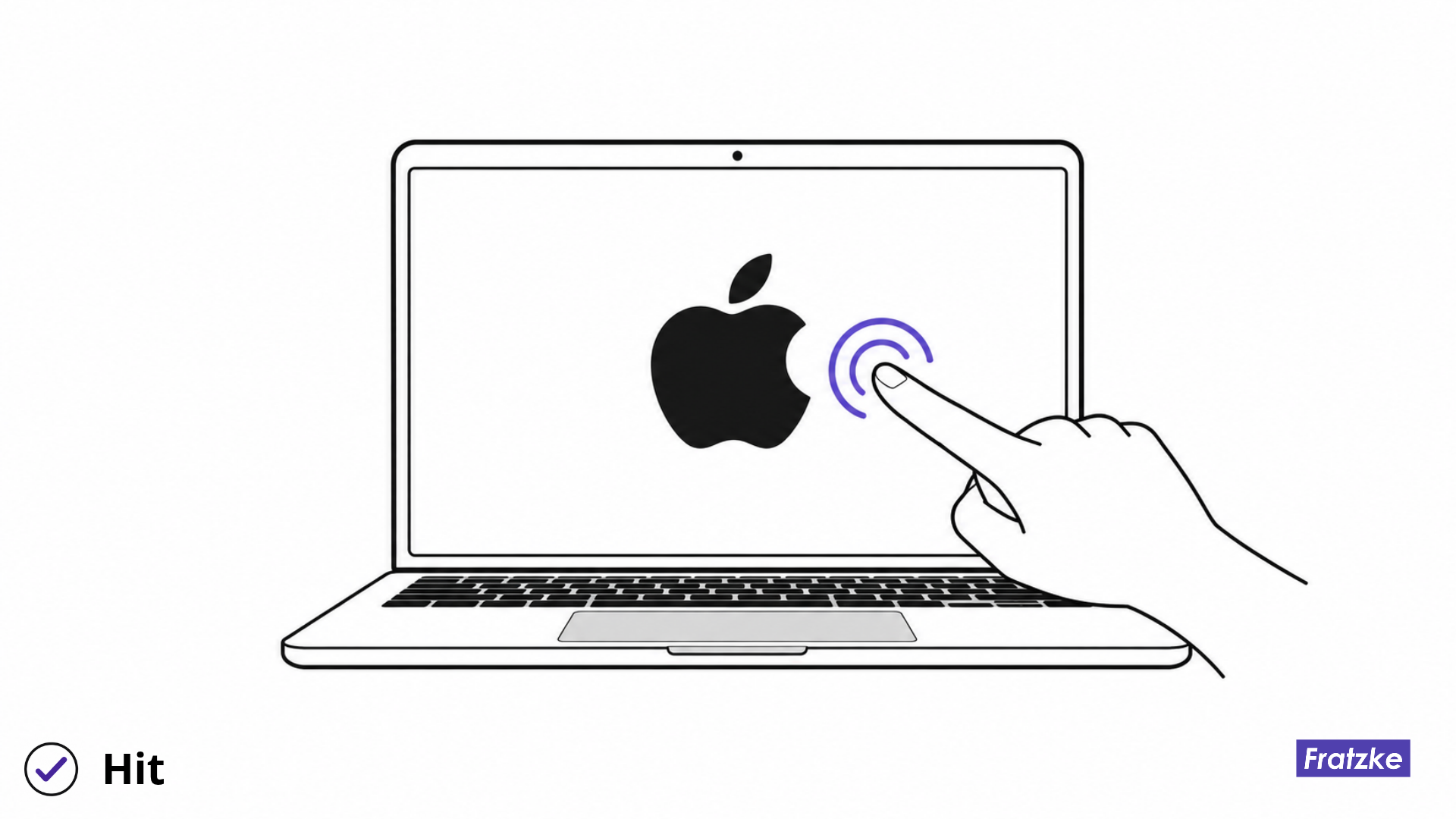
Apple has officially introduced its first touchscreen MacBook Pro.
For years, Apple has been pretty adamant about keeping touchscreens off its laptops.
Steve Jobs famously criticized the idea back in 2010, arguing that reaching up to touch a vertical screen would become uncomfortable over time.
And for the most part, Apple stuck to that philosophy.
Until now.
On October 28, Apple introduced a new MacBook Pro that adds touch capabilities for things like drawing, manipulating content, and working with creative software.
What I like is that Apple is keeping the familiar keyboard and trackpad experience while giving customers another way to interact with the computer.
I have to give Apple credit for this one.
Just because a decision made sense in 2010 doesn't mean it's still the right decision today. Customer expectations change, technology improves, and even Apple needs to be willing to reconsider its assumptions.
Now, I'm still curious whether people will actually enjoy reaching up to touch their laptop screens throughout the day.
Maybe Steve Jobs had a point!
But I respect Apple's willingness to revisit something it defended for so long.
And I think there's a useful lesson here for established brands. Sometimes the decisions that helped make you successful deserve another look.
That's a Hit in my book.
Sources
- Apple Newsroom, "Apple unveils groundbreaking MacBook Pro with PROLED XDR Display and Touch for the first time on Mac"
- The Verge, "Apple announces its first touchscreen MacBook Pro"
The Miss: Meta Should Have Had This Conversation First

Meta was preparing to update its advertising and business terms, and publishers weren't particularly happy about some of the proposed language.
The concern?
Whether the new terms could give Meta broader rights to use publishers' content for AI services.
Meta says that's not what the language means. But after concerns from publishers and advertisers, the company announced on October 28 that it would delay the rollout while consulting with industry groups.
I think pausing the rollout was the right call.
My issue is how this situation developed in the first place.
If you're a publisher investing time and money into creating content, you probably want to know exactly how a platform like Meta intends to use it.
Especially when AI is involved.
What content can be used? What is it being used for? And how much control does the publisher actually have?
Those seem like pretty reasonable questions to me.
And Meta is in an interesting position here because it has so much power over these relationships.
Publishers depend on its platforms to reach audiences. Advertisers depend on them to reach customers.
When you're operating at that scale, changes to the terms of those relationships deserve some pretty careful communication.
I think Meta could have avoided a lot of the frustration by having these conversations before introducing the proposed changes.
The good news is that the company now has an opportunity to address the concerns and provide more clarity.
Hopefully, it takes advantage of that opportunity.
But for now, I'm calling this one a Miss.
Sources
- Reuters, "Meta delays rollout of new commercial terms after publishers' concerns"
- The Verge, "Meta says it'll probably delay its controversial new business terms again"
That's a wrap on this week's Two Hits & A Miss!
Thanks for reading. I hope these stories gave you a few ideas to consider as you think about your own business and growth strategy.
See you next week!


