
This article was originally published on Forbes.
The Prologue: Why do marketing leaders come to us for marketing audits? They want an outside expert perspective. We work with mature marketing teams looking for every possible competitive advantage, as well as developing teams that recognize they may have blind spots. Regardless of where a team is in its journey, a fresh perspective can uncover missed opportunities, challenge assumptions, and identify new paths to growth. Sometimes, the most valuable thing you can do for your marketing strategy is bring in an outside perspective. In my Forbes article, 5 High-Impact Marketing Audits To Improve Your Brand’s Performance, I explore five types of audits that can help marketing leaders uncover opportunities and make more informed decisions.
When faced with business challenges, competitive pressure or even growth opportunities, it’s natural for marketers to want to react quickly. But responding to marketing symptoms, such as lower conversion rates or higher acquisition costs, can result in overlooking issues with underlying systems. This is why digital marketing audits are an essential tool that can help you implement more effective strategies and improve performance. Yes, they might make you feel like you’re stalling when you should be hitting the gas, but marketing audits are designed to accelerate momentum by ensuring your strategy and systems are headed in the right direction.
What Is A Marketing Audit, And What Makes It Effective?
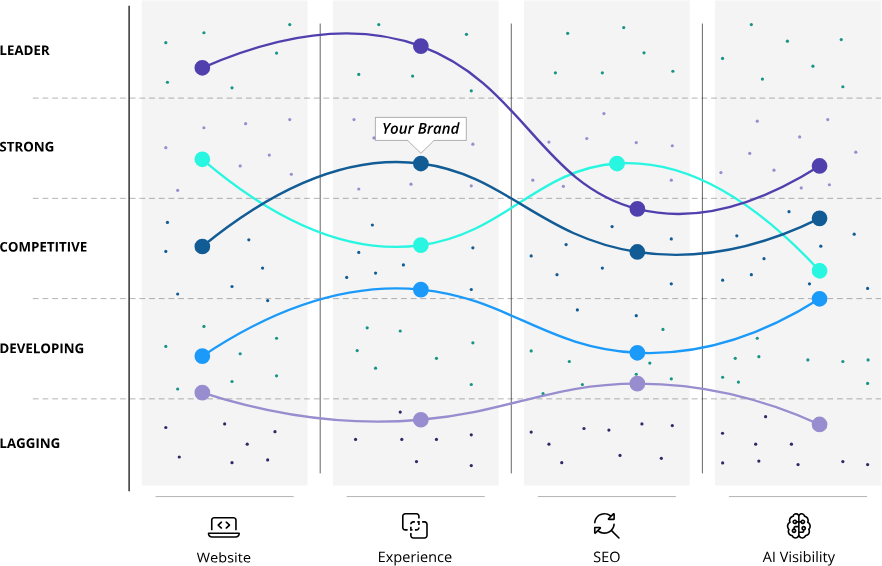
A marketing audit is a structured assessment of how a brand is presented, how it’s received and why customers choose it (and why they don’t). It’s meant to be an objective assessment rather than a defense of internal actions or decisions.
The most effective marketing audits evaluate what is happening and why, while also looking at three dimensions of performance:
- Your Past Performance: Are you growing, and is that growth accelerating?
- Your Market: Are you ahead of industry benchmarks?
- Your Direct Competitors: Are you winning versus your closest competitors?
While it’s important to track all three types of these performance indicators, it’s equally important to do so on a consistent basis. Establishing a regular cadence for the right type of marketing audits for your business can make all the difference.
5 Essential Marketing Audits
Marketing audits can range from comprehensive reviews of every digital channel to deep dives into specific parts of your strategy. Below, I’ll share five high-impact audits with the greatest potential to strengthen your brand.
1. Brand Audit
A brand audit assesses your brand’s overall health and helps you understand what people know and think about it. It evaluates how effectively your brand strategy is being executed and received. In a world of ever-increasing competition and noise, understanding how people perceive your brand can help provide an honest picture of its strengths, weaknesses, opportunities and gaps.
Brand audits typically include six foundational areas that provide a comprehensive view of your brand’s health:
- Brand strategy and positioning
- Brand purpose and messaging
- Brand identity
- Audience perception
- Competitive brand analysis
- Internal brand alignment
2. Website Experience Audit
A website experience audit assesses how website visitors use and navigate your website. It also identifies any friction they encounter along the path to taking an action, such as making a purchase or booking a demonstration.
Websites are the digital face of a brand, and for many, they serve as a critical sales channel. Understanding and optimizing how customers perceive and interact with your website can significantly affect both engagement and revenue.
Website experience audits involve examining visitor behavior and journeys and how they are impacted by factors such as your site’s design, usability, content SEO and technical health.
3. Customer Experience Audit
A customer experience audit assesses how customers experience your brand across all touchpoints, including both digital and physical. At its most basic level, it helps you determine whether customers are having a positive or negative experience with your brand.
Experiences can make or break brands. While positive experiences help drive revenue and cost efficiency through repeat purchases and loyalty, those that are less than optimal can quickly increase attrition, damage brand reputation and drive customers to competitors.
Customer experience audits typically evaluate a customer’s overall journey from awareness to conversion and even advocacy. Make sure you take into account qualitative measures such as brand consistency and customer service, as well as factors that contribute to quantitative metrics such as retention rates, customer lifetime value (CLV) and net promoter score (NPS).
4. SEO Audit
A search engine optimization (SEO) audit assesses the visibility and strength of your brand’s website across search engines. It evaluates how well the site’s structure, backend and content help users discover the brand organically.
The cost of customer acquisition has only continued to rise due to increased competition and the investment required to participate in paid media channels. Organic search is therefore an increasingly valuable source of traffic as it’s typically composed of highly engaged, target customers.
SEO audits involve examining the technical mechanics of your site, including its infrastructure, backend and data setup, as well as how content supports discoverability through quality, keywords and links.
5. GEO Audit
A generative engine optimization (GEO) audit assesses your brand’s overall presence and visibility across AI platforms, as well as the accuracy, authority and quality of the answers. Technical components are also included, such as bot access, speed and structure.
Although a newer discipline, GEO is quickly gaining importance as customers are using generative AI in addition to and in some cases in place of traditional online search engines. This type of audit can help your brand get ultimate visibility—not just showing up as a search result, but being a part of the answers that customers are searching for.
At my agency, we use several tools that marketers can also leverage, including Semrush and OtterlyAI. Both tools allow you to track and monitor AI visibility and mentions of your brand and competitors in generative search. They also offer technical scans to ensure your site can be crawled and indexed by generative engines.
Ready To Improve Your Brand’s Performance?
Marketing audits are most effective when they become an integral part of a team’s system rather than an isolated project. To get started, review a sample digital marketing audit report to understand how findings and recommendations come together, then identify which audits would have the most impact on your business and commit to a cadence your team can support. By proactively investing in your marketing system through audits, you’ll be less likely to reach for reactionary tactics and can instead leverage solid strategies that will propel your brand forward.